Monday, December 15, 2008

The rise of low culture.

The reason for the blog below might be linked to this blog now. The influence of minorities within popular art. Living within the inland-religious city boundaries, it might be difficult to discern these influence. I swear to God, 90% of this state is white, but yet, the Mormon culture cannot oppress the influence of the minority culture that has burgeoned in larger communities for years. Here, I present an example, in a double blog: the influence of minority culture in pop culture, and the rise of low art to high art -- graffiti.

Now, graffiti is an ancient art form, dating back to scratching advertising brothels in Ancient Greece. Contemporary graffiti is marked by the use of spray paint. It is convenient, easy to use, accessible, and one is able to mark a larger area with such tools than a Grecian might with a stone found on the side of the wall.

I think the main keywords of this blog are as follows: Accessible, and Paint.

But how can we link the contemporary graffiti art to a minority influence? As it is linked with hip-hop influence, a predominately African-American genre, we can thereby conclude that it is clearly linked. Yet, the rise and dominance of graffiti wasn't considered serious until the rise of Basquiat, of Puerto-Rican and Haitian descent, who had a definite influence on how graffiti was viewed by critics and the larger public. Otherwise, graffiti can be linked to gangs, and the attempt of gangs, consisting of various minorites, or rather, a group of displaced people banding togethor against the larger whole (such as Rude Boys, or Punks, or Cryps, or Straight Edgers) to mark their territory. This might be a bit misguided, but marking one's territory might not be too far off, as the first contemporary graffiti consisted of an individual writing down one's name in spray paint, thus marking where he/she has been. It can be agreed upon that a single person is a minority against a whole population.

I drove around Salt Lake to see if I could capture the rise of graffitti from a simple marking of one's presence to the height of art. It wasn't too difficult, and the result were quite rewarding:

One can clearly see the progression from street art to the elevation of high art. The last two are pictures taken at the downtown Salt Lake Library. What we have is a progression from mere name scratching to more and more complex pieces. Yet, these piece aren't going to possess the intellectual complexity of, say, Picasso. One has to simply remember the form - spray paint. Accessibility, and temporality. This is what inspired the 337 project a few years back. The point was to create the most extravagant piece of work on the most temporary sturcture. This is what graffitti seems to lean towards - working with human-based structures, acknowledgement of temporality, accessibility, and style. Each tagger has their own style. Then there is elevation, as is evident in the last two pieces. This might be construed as a postmodern progression, yet I view it as something otherwise, something more baroque. Yet, neo-baroque is not an adequate enough term, since it is reserved for something a bit more formal. The term we must designate for this progression in art should be along the lines of urban baroke.

Sincerely,
Me.

And another thinggg....

As I was writing my blog on feminism is pop culture studies, I realized that there is something noticeably lacking withing the text assigned in the class: a postcolonialist analysis of pop culture.

Perhaps post-colonialist is an outdated term. This is generation Y, and we don't give a fuck. Therefore, I dub it: race studies. I think this a movement beyond the standard Frantz Fanon or Eward Said reading of culture. These are probably obvious. And the test comes really close, I have to admit. There is a part that focuses on Americanization that seems to almost come close, which is a concept developed Richard Hoggart about his growing pessimism about American culture infringing on the working-class British culture. Here, Hoggart tends to see American culture is overriding the native culture, and when the British culture attempts to create its own culture it is derided, which tends to hypocritically echo the argument of Fanon, in his post-colonial study, in which a country attempting to establish its independence from its imperialist force is praised for either mimicing the imperialist force, or attempting to replicate an older, native, and since-destroyed culture. But when this independent country attempts to create something unique, it is criticizes and derided, such as Jazz, and Jamaican reggae, and so on. But Strinati has yet to make this leap.

I am wondering if this is perhaps because race is kind of a unique relationship in American. We had that slavery and all, plus all of the plague-infested blankets, and the internment camps for the Japanese, and the stealing of Mexico from the Mexicans, and the who screwing over of the natives overall. Perhaps, as an American, I am more sensitive to these type of things, particularly in light of the span of affirmative action movements within this country, which might lack in Britain (of course, I assume Strinati is British, due to several spelling differences, such as "Americanization," versus "Americanisation." Yeah, totally British). Yet, Britain is definitely more imperialist that America ever was, in light of African slavery and native genocide (I mean, those were technically cause by the British anyway).

Why is a race-analysis needed? Well, perhaps because it is so prevalent within pop-culture. Who can deny that Maria Carey just outsold Elvis in record sales? And that Elvis was merely mimicing the style of the black minority of the time to make his way to the top? Who can deny the influence of rap culture within our society, and how it has effectively permeated throughout all art froms, such as graffiti-art and slam poetry? Minority influence has definitely influenced pop-culture in a variety of ways. Perhaps this has been only contained within the urban areas, while the rural areas of America and other countries still cling onto folk forms, such as Kenny Chesney and Garth Brooks. Yet, this is an era in which Kanye West is consistently on the charts, well above any country or (sadly) folk songs.

So where is this analysis in "An Introduction to Theories of Popular Culture?" Absent in my addition. Is this a case of denial? Perhaps the British aren't able to acknowledge the affect of minorities on pop culture? Perhaps the schism of race wasn't as prevalent in their own native British land as it was on America, where slavery was prominent, and lowly jobs are still relegated to Hispanic minorities? Perhaps the British are less prejudice, and more color-conscious of race than Americans?

If this is the case, it is still something that remains precocious. Why have all the major influencing factors in pop culture been predominately minorities? Why hasn't the Anglo culture been more prevalent, given the majority of the population has been populated by the whites? Many of these questions could yield peculiar answers. Perhaps being white and middle class doens't move one to create art, or anything from the soul. Perhaps being repressed forces more creativity.

In Salt Lake, we have a similar situation as the one presented by Strinati: the ignorance of race-analysis in pop culture. Recently, I heard a popular local conservative talk show usually hosted by Doug Wright. On this particular day, the host was a stand-in, and the topic of interest was the upcoming election. This host was worried about how much race would be an issue in the the election. He said that race should not have a factor in Utah because as he grew up, he had never really experienced racism in Utah. He had never actually encountered an instance of racism. Obviously this man was raised in the utmost level of the Salt Lake Temple. Of course, this man had apparently forgotten his Utah history classes, or else he would have remembered a place called Topaz, and Mountain Meadows. He might have remembered the English-only law Utah passed in 2000. He might have recalled the thousands of undocumented workers that take on menial jobs for menial pay that keep himself financially sound. But he had failed to recognize any racism within Utah.

This is troubling, because a failure to recognize blatant racism might also lead to a failure to recognize the obvious advancements and accomplishments that minorities have made in pop culture, and their definite influence on popular culture as we know it. What I see from above is a lack of acknowledgement of any sort of race. This allowed the talk show host to proudly proclaim that race was not a determinate factor in his world, where is definitely was. My perception, from Salt Lake, is otherwise, that pop culture has had the most influence from minority culture, and the failure to acknowledge race is a failure to give credit where it is due, which inherently lulls individuals into a silent, passive racism.

The Female Chauvinist Pig Ideology

I have nothing to say about feminism.

Except for this:
I have noticed that since reading Female Chauvinist Pigs, by Ariel Levy, in class, that many of the women who decided to begin a blog for their final project have decided to do so based around this book, carving out their own unique feminism, and their own unique counter to the raunch culture coined by Levy. It is my theory that everyone who reads this book is automatically obligated to become a feminist instantaneously. It is as though that feminism is now a new gender role that every woman must take up.

I for one believe that this is admirable. A consciousness about one's place in the world and their relations to others in important. As a man, I admit this. As a man, I admit, I too am a feminist.

What Ariel outlines is the idea that contemporary women feel that they have only one thing to offer to succeed in life. This is the sex, or conceding to male counterparts. But what she is also implying is that this is the only thing that men want, is the sex and the concessions made to them by female counterparts. While this may currently be true, I don't find these sentiments within myself, for what we are operating on is a system of expectations. There is a machismo expectation, a chopping wood expectation, a muscular expectation from men which stems from an inherent hunter instinct, a bring-home-the-bacon instinct. None of these I have, since my my body is too slender and effeminate to hunt, or build muscle, or make any money at any time, so I feel that I am prohibited by my gender role.

As Dag in Generation X would say, I am a lesbian trapped in a man's body.

Living in Salt Lake, I observe gender roles play out like gangbusters. This is a society where the church is prevalent. We have passed laws that force people to fall into their gender roles, the ideological role of marriage. This is a place that, if born into the religion, your role is mapped out for your throughout your life, and a deep schism and separation is made aware from the outset. Feminism is kind of like the desert here.

But outside of Utah, in real life, there is a semblance of hope. What Levy is writing about is a generation different from my own. I was born a generation later from those HBO executives she writes about. We are a generation apart from many of the people she targets in her book. She appears to be in or on the cusp of the Generation X. But I fall into the Generation Y, which is marked with cynicism and apathy and irony and technology, and the role of feminism seems to be moving closer and closer to a Julia Kristeva perspective, in The Cyborg Manifesto, whereas humans are becoming more and more interconnected to technology, which is sexless, that they themselves become sexless. The movement seems to be more toward an androgyny of a Woolfian type, but with a technological basis.

Therefore, I believe as we move closer and closer to a unixex culture, there will still remain one last bastion of sexism:


This image reminds me of some other image I recall in my recent past:


This picture, illustrated by Jacques Lacan, is telling of the remaining gender differences that will be the most persistent in society. The doors are the same, the toilets are the same, the only thing separating the two is the acknowledgement of difference in genitals. As long as we are forced to acknowledge that our genitals are different, we will always acknowledge that we are different, which will stem into a percieved knowledge that our roles are different, no matter how androgynys we may become. When we move further towards technology to the point where we cannot see each other, and are able to ignore the slight physical difference between each other, perhaps then we will be able to inhabit more equitable planes.

I've got to make this quick.

Because I have learned that my computer loves to die at the worst times, typically after I have been writing for a while, and I lose a lot of work. So, I am going to attempt to get through as much as I need to say with as much brevity as I can. Here goes:

So, last night I went home, and my mother had two brand new HDTVs in the house, not that there was anything wrong with the other, lowly televisions. We have one from the cold war that has been operating like a champ and still chugging away, thus, no need for a new TV. Until now. Federal entities now require you to have an HDTV if you want to get any television at all. This doesn't affect me as much directly, since I don't watch much television anyway, but for people like my mother, who view the television commodity as a neccessity, it means she had to go out and purchase new sets. These regulations are clearly an attempt to force spending. Another example of reverse-hegemony. This is my version of Gramscii, whereas he said that the repressed agree to their repression to a certain extent, and then must push until the ruling power concedes, and then the repressed party continues to consent. Benjamen Franklin said something about "Those who are not willing to sacrifice liberty for safety do not deserve neither," or something along those lines (paraphrased). This is the other way around. "Those who can't repress these people well enough, manipulate them into spending more money, get the government to require everybody to do so." Bam, the repressor has found a way to get its way.

Saturday, December 13, 2008

Ikea / Prison

When I was a courier for a downtown law firm, I used to drive to Provo to file documents with the Utah County court. My journey inevitably led me past the edge sprawl of Salt Lake, as well as the edge sprawl of Utah County, so close together, now, almost touching, like two flirtatious yet-to-be lovers sitting painfully through the duration of a horrible screwball comedy that neither of them are really paying attention to. Growing up, I knew that this area of Utah was where no one really wanted to live, keeping it remote, and thus, an ideal place to put a prison.

As the life of the great Salt Lake City, the city of my memories, continued on, more and more people desired their own backyard, a bit of space, a piece of mind and action, etc. This is what prompted my family to move to Midvale years ago, a suburban paradise replete with mini-malls and nothing to do. I remember that back then, there was still grazing land. We would feed horses carrots through my friend's fence in his backyard. It's all been filled in, though, with housing, and this is true around the prison. Surprisingly, in the area of the Utah where everyone dreads to be sent, home of convicts and criminals, people are moving in droves.

On my courier runs, I was fortunate enough to drive past the construction of the new Idea store in Draper, a yuppie young city that drew controversy for its zoning practices a few years ago, not allowing second-hand stores to built within their downtown area. A city like this deserves an Ikea. The Ikea deserves a place like this.


During the construction, as I would doze in and out of consciousness while navigating tumultuous 1-15 traffic, I would often pass the Ikea and trick myself into believing that I was actually passing the prison. It took me a couple of minutes to realize where I was, but I was always intrigued by how similar these two structures were, architecually, at least before the yellow and blue paint went on the building. Yet, there still remains architectual similarities between the two, and I am certain it is not accidental.

Simple box-like structures made for the soul purpose of containing people. They both have watchtowers too.


If you combine the two, the prison and the Ikea, then you render a pretty amusing image. Luckily, I don't have to detail it out for you, because it already exists.

That's right. A big-box commercialist prison. I don't know where to begin with this one. Could I make a statement about resistance/containment? Could I put Gramscii's hegemony into the mix? Could I season it with a bit of Adorno? What about Michele Foucault's Discipline and Punish? Yes, yes, yes yes yes.

What this image suggests is how we are prisoners to the commodity culture, as much as we'd like to think we are free. This simply isn't true. While prisons are made to incarcerate those who commit real crimes, the prisons for those who do not commit crimes is Ikea. Adorno would point out how interchangeable these parts of our society are, and Ikea is not a place that is bashful about the interchangability of parts.

The two room layouts above seem to suggest the individuization that those of the Frankfurt School were wary of. The idea that there is a suggestion of something unique and individual, but when it comes down to it, it's all the same, just with different coverings (as shown by the sequence of couches between the two rooms). Underneath these covering, there is nothing different about them. Now, one may argue that you could just go to a different furniture store for a different selection. This is true, but what you are suggesting is that there is an established need for these items. Everyone needs a couch, everyone needs a TV. Houses themselves are built around this concept of furniture need, creating rooms like a family room, and a living room, and a kitchen, and a dining room specifically designed to suit these material needs. One does not necessarily need a couch in the living room, or a TV. As I write this, I am sitting on the floor (I believe being poor allows one to more easily deconstruct the needs of the boojwa). Yet, with the integration, homogenization, synthesis of furniture stores such as Ikea, we give in to the idea that we do need these items.

My own apartment is a battleground for this dialectic. Growing up in my home in Midvale, the family room and living room both had a cubby for the television. Moving downtown, in my apartment built during an era where television was relatively new, the designers neglected to add a cubby or nook for the television. Placed in the room, it juts out awkwardly. It doesn't really fit against any of the walls. The walls were designed more for places to sit and coffee tables rather than an adequate entertainment center. Back then, television had not yet become a part of the daily life of an American.

This concept is an evolving one, constantly dynamic, and we constantly see how the environment has not been able to catch up with the progression. Many automobiles are rigged for entertainment centers, while older ones lack the accessory option. My own car doesn't have a CD player, even though the majority of entertainment media I possess is in CD form. Certain clothing is designed with places one can put accessories such as a cell phone, or an MP3 player, while older clothing lacks these features. The list goes on. We are given items designed to accomodate assumed necessities, and without thinking about it, to fill in these spaces, we buy these accessories as though they were essential to our well-being.

This seems like a double-play of hegemony. Gramscii may have had a governmental party in mind when he created this theory, but in today's market economy, it has shown to work on a commercial level as well. This is basically supply-demand economics. As a people, we rise up when our needs are not being met, but the commercial industry seems to do the same. If they do not get what they want, if you do not buy their product, then other, more essential products are made to accomodate the accessory, until we cave in and buy it. If this isn't effective enough, then these commercial industries find other ways to get our money, such as asking the government for 35 billion dollars. This money doesn't just come out of nowhere. It is taxpayer money, potential consumers who just didn't buy. Well, we might have make that purchase whether they want to or not. This seems to bring us back to the image above of the prison watchtower overseeing the Ikea. We have to buy whether we want to or not.

Thursday, December 11, 2008

An addition to resistance/containment

Resistance, no wait, containment, no wait, resistance, no wait. Some form of a hybrid. Resistainment.

Sex, Drugs, and Cocoa Puffs

Ah, Chuck Klosterman, lonely old courage teacher. You give us cool. I don't know, cool reminds me of the dairy section of the supermarket. The only thing I have to post on this is the hipster olympics, which everyone should watch.

Homogenization


Last Saturday I got fairly drunk, which left my whole Sunday open to walk around mindlessly, recovering from the effects of hangovers. What better place to wander than around my own neighborhood, particularly my local grocery store, searching endlessly, desperately for items I would not know how to use, or make, or anything. I enjoy grocery stores, partially because my favorite poem by Allen Ginsburg is A Supermarket in California, and my favorite song by The Clash is Lost In the Supermarket.

For this particular day, contemplating pop culture, these two pieces seem particularly appropriate. The supermarket, or grocery store (in vernacular terms) is the ultimate source for homogenization. This is where taste typically goes to die. Those old recipes of our grandfathers and grandmothers get lost searching the aisles for something genuine. In his poem, Ginsburg is looking for something real, something genuine. All he can find is images. He finds whole families shopping in the aisles as if the grocery store were a ritual. Here, you find Lorca befuddled, and Whitman completely lost, looking for his angel and only to find pork chops and bananas crudely juxtaposed, side-by-side, in a way they probably would never be in the real world. The poem extends beyond the grocery store, though, and out into the streets, where Ginsburg continues to wander. He is still in search of something genuine, yet the streets, again, leave him just as lonely as the supermarket had, still baraged by images, and nothing with any depth or meaning. In the end, he asks Whitman, whose vision of America in Song of Myself, and America full of ingenuity, freedom, the search for the self only exists within the prim pages of academia, and not within the common people, he asks what has happend to us? Where has the Odyssey gone? Where is the journey? Where is the cultural heritage? Where are the stories?

Joe Strummer understands this. His song seems to explain what happens when we are raised in supermarkets. We live empty, meaningless lives without a personality, without interest, an overbearing listlessness and ennui. He explains that life in the supermarket is simply a life of homogeniety, without individuality. A life where you are not born so much as you fall out. The search for identity is over here, because you have no identity to speak of.

"According to MacDonald, mass culture is a threat because it is a homgenous culture which levels down or debases all culture." This is from my pop culture book, "An Introduction to Theoris of Popular Culture." I know, how academic, how perverse. How could I take the easy way out? Yet, I wouldn't know who this MacDonald cat was without helpful textbooks such as this. In this next quote, by MacDonald, try replacing "Mass Culture," with "Supermarket." "[Mass culture] is a dynamic, revolutionary force, breaking down the old barriers of class, tradition, taste, and disolving all cultural distinctness." Simply put, since the industrial revolution, our culture has been produced on a conveyor belt assembly line. Most of the items I own, except my memories, came from slave laborers and sweat shops, and a billion others exactly like it exist. Am I worried, as mass culture theorists are, about the loss of folk culture? Not as much. My fear rests with Ginsburg, that there won't be any culture at all, a complete loss of the self, the journey, that narrative journey that Frederic Jameson is always talking about.

Note the picture above to the left. It exemplifies much about Salt Lake and my own upbringing. I was raised in the Mormon church, a worldwide religion. Salt Lake is the center of that religion (see previous blog). The gatherings on Sunday are huge. In the area I grew up in, there are 4 churches within a 2 mile radius of each other. Each has two wards, and all the wards are still overcrowded, with an attendance of a couple hundred. The religion is uniquely American, and it shows. From America we get the birth of the assembly line, and this is most prevalent within the church. Your progress through the church as well as your life, is strictly guided. If you have the lucky chance of being born into the religion, then you were probably born to parents too young to have children. My parents had their first when my mother was 18, and my father 25ish or so (which makes me wonder what kind of high schools my father was cruising). You go through being a sunbeam, and primary school, until you turn 8, and then you are baptized (which is a fairly noble aspect of the church. Rather than being baptized at birth and not having a choice, you get to mature to the ripe age of 8 to make the decision of faith. Another uniquely American aspect, stemming from the Great Awakening). You move on through the religion. If you are a girl, your progress pretty much ends there. You are best off learning how to knit in a group known as "Relief Society." If you are a boy, you contine, becoming a Deacon, then a Priest, then an Elder. I made it as far as Priest, which is pretty okay when compared to other religions, how it takes years of religious training and study and seminary to reach the level of priest. All I had to do was turn 13. When you turn 21 you go on a mission, and when you return 2 years later you get married and have kids when you are probably far too young to have kids. This is the standard, and, as you can see, very conveyor-belt style. Did I mention how exciting church is? Just look at the expressions of the Mormon congregation above. Absolutely enthralled. I think you may see the effects of homogenization written all over their faces.

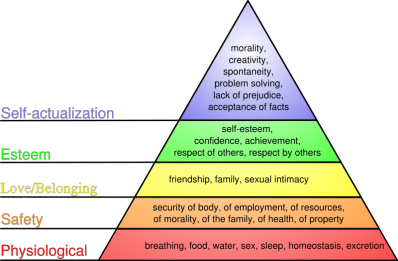
But why does it begin at the supermarket? Why do Ginsberg and Strummer see the supermarket as the death of the metanarrative. It has something to do with how identical everything is. Perhaps it is the end of the great "family recipe" as I mentioned above. I think a better example might have to do with some kind of Maslow's hierarchy. Food is the most basic and essential element of human life. If you can't eat you can't live and and wake up and have a bunch of friends and get drunk and do drugs and go to sweet rave parties. We need food. If only someone had a handle, a control of food. Why, that person would be a genius! So, all of this food is put in one place. The pork chops are next to the bananas and all of that. The more food this place has, the more desirable it would be to go to this place, rather than the alternative hunting and gathering. Thus, this place exists, the market, where all the food is. Of course, there are several different companies making the same food, so there are different containers of the same food. But if there is so much of the same thing, it would probably help to make the product stand out. BAM, marketing, images. Of course, all of it tastes the same, the only real difference is the images. So, lots of people come to this place, and it has to grow to become a supermarket. It catches on. The whole town comes to this place. I am not a statistician, but I believe more people will go to the supermarket than to chu rch, or to school, or to any place that offers something close to the top of Maslow's hierarchy, that whole "self-act ualization" business. So, this place becomes the center of everything you need. This place needs to make money, so th e re is more and more marketing. Eventually, this place offers everything you need that apprears on the botton of the heirarchy, which you might remember from high-school-debate days, is breathing, food, water, sex, sleep, etc. It is the nerve center. But that is all it has. And there is a lot of importance placed on that low tier of the heirarchy, because there isn't as much money to be made on the other things. So, these items are marketed to be the most important items of life, which are homogenous. Thus, the life of the society become homogenous.

If I am not careful, I might become a mass culturist.